


15 years ago, FromSoftware doubled down on its ambitions that stemmed from Demon's Souls. Japan got the first taste, but on October 4, 2011, Dark Souls hit the rest of the world. Its impact on pop culture is vast, with the game's title becoming part of the lexicon. If something is tough, comes with a dodge roll, and has bosses? Yeah, that's "Dark Souls meets" whatever the flavor of the week is. Yet, despite its crushing obstacles and often unforgiving nature, I look at it with a very fond, loving lens.
Like many, it kicked off my journey into the world of what we call Soulslike games. It isn't just your standard action RPG. It doesn't feel encompassing enough to say that. I first came across Dark Souls at a friend's house, watching them fight their way through the terrors of Blighttown. Full of poison and horrible platforms, it houses Chaos Witch Quelaag, a half-woman, half-spider demon waiting to eat my bone marrow. Suffice to say, it left an impression. Then, some years later, I'm at a Sunday morning car boot sale, or flea market for those of you across the pond.
At one of the stalls, priced at just £5, sits Dark Souls: Prepare to Die Edition. In all of its janky framerate glory, my voyage into Lordran begins on my Dad's PlayStation 3 in the garage. With no internet connection to patch it, it's about as bare-bones as it gets. The true "launch day" experience, if you will. But, unbeknownst to me, an unexpected outcome stared me in the face. I just didn't like it. At all.
Yes, playing it unpatched probably didn't help. However, something wasn't clicking. That sense of adventure I felt from watching my friend play? It wouldn't manifest. So, Dark Souls sat on a shelf for a while. That all changes when Dark Souls: Remastered emerges. Gifted to me for my 22nd birthday, the challenge begins again. This time, I'm at university, half living at home, half living with my girlfriend in her student accommodation. In that accommodation? A gaming space you can use to your heart's content.
This was it. This is where Dark Souls finally clicked into place for me. Over the course of that summer, my girlfriend and I would stay up until ridiculous hours as we pushed further into Lordran. With her iPhone 8 in hand, she'd research what we needed to get better weapons, unearth hidden areas, or look up tips for any bosses that stomped us repeatedly. It is genuinely one of the greatest gaming experiences I've ever had in my life. Only last year's Elden Ring: Nightreign has come close to capturing that feeling again; an absolute gem of co-op greatness.
And I think that's what I remember most about Dark Souls. Not necessarily the difficulty, despite what its reputation would have you believe. I remember the discovery. I remember finding a shortcut and realizing that an area I thought sat miles away actually connected back to somewhere I already knew. I remember finding a new weapon and wondering whether I could build an entire character around it. Most importantly, I remember finally beating something that had absolutely destroyed me for hours. That feeling sits at the heart of Dark Souls.
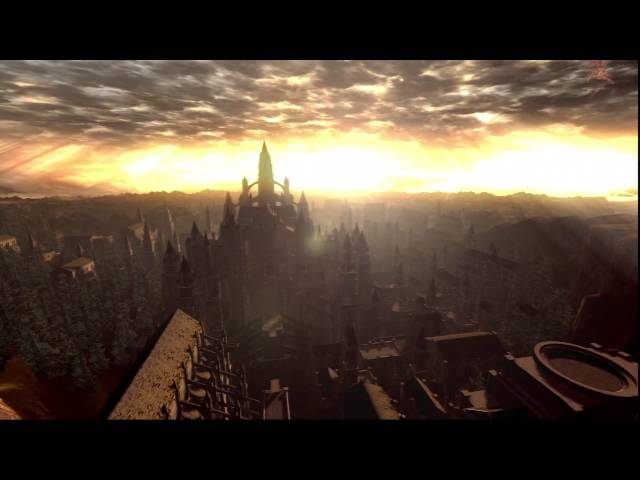
I'm still in awe when I think of Lordran and its interconnected pathways. Dark Souls trusts you to figure things out. Seeing Anor Londo for the first time is a magnificent moment, with its stunning, decaying Gothic architecture set against a shimmering golden sky. This is where I'm sure everyone cut their teeth on parrying. I get chills just thinking about the parry noise. That's the juice right there.
Dark Souls, perhaps more than most games, wants you to become one with the idea of a learning curve. It's not hard for its own sake, although getting smashed to pieces by Ornstein and Smough certainly makes it feel that way. FromSoftware understands the beauty of reward, that feeling that washes over you in the passion of victory, probably more than any developer out there. Death isn't all it seems.
Speaking to IGN in 2018, FromSoftware president Hidetaka Miyazaki said that "the game focuses a lot on death, but what is death? What does it look like? What does death mean in this world? What does it mean to live and to die? That is something we discussed very closely. The story is about a fire in the world, a symbol of both living and death." It's right at the core of survival: igniting bonfires.
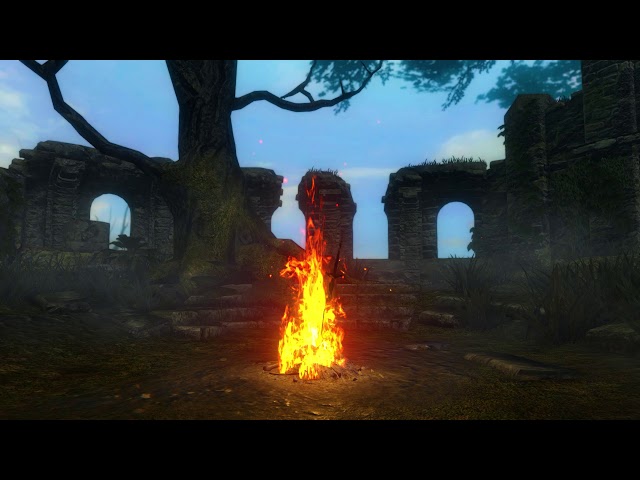
A Dark Souls bonfire is a safe haven, a place to think for a moment. I could listen to the ambiance and Motoi Sakuraba's gorgeous score at the Firelink Shrine for hours. Despite all of the grotesque enemies and the looming horror Dark Souls infuses, it quietly shelters a beauty in its world, a place to theorize and lament on times gone by.
But perhaps the biggest testament to Dark Souls comes from what happened after it. It became a genre. Developers took inspiration from its combat, stamina management, boss design, cryptic storytelling, and philosophy of letting players learn through failure. Nioh, Lies of P, Lords of the Fallen, and even Star Wars Jedi all carry pieces of its influence, while FromSoftware itself continued to evolve the formula through Bloodborne, Sekiro, and eventually Elden Ring.
Fifteen years later, you can barely talk about the hard games without someone mentioning Dark Souls. Yet, when I think about it, I don't think about its legacy first. I think about sitting in that gaming space with my girlfriend, staying up far too late, trying to figure out where the hell we needed to go next. I think about her phone sitting beside us as we looked up weapons, secrets, bosses, and whatever else had just flattened us. I didn't understand Dark Souls when I first played it.
Then, eventually, it clicked. And maybe that's the best way I can describe why Dark Souls still matters 15 years later. It taught us to be curious. To experiment. To connect.