


A few years ago, an indie game called Moonlighter made its way onto my radar. I played it for hours and hours and had a great time. Then, a few years later, what should appear but Moonlighter 2: The Endless Vault, a sequel bringing us back for more.
It launched into early access last year, but the full release found itself on Nintendo Switch 2 in September 2026. I immediately dove in to play and noticed the changes between the first and second game, so I talked to Victor Ribera, the Design Co-Director of Moonlighter 2, all about the game's creation and how the process of bringing it to Nintendo Switch 2 went down.
Without further ado, let's get into the questions.
Pocket Tactics: Where did the original idea for a shopkeeper sim turned roguelike come from?
Victor Ribera: It mostly comes from our own experience making games. Before Moonlighter, we worked as an outsourcing company, making games for other studios while dreaming of making our own, a lot like Will dreaming of being a hero while still taking care of his shop. From there, we mixed in influences from games we love, like Zelda: The Minish Cap, Recettear, and Torneko's Mystery Dungeon, where little heroes and humble merchants take on big adventures.

A lot of Moonlighter 2 players will likely have tried (and/or completed) the first game already. Would you recommend playing the original before Moonlighter 2, or can you jump right into the sequel?
You can absolutely jump straight in. Moonlighter 2 carries on Will's story, but it's built so new players never feel lost. There's even a handy introduction that covers everything you need to know before starting a new save. And if you end up enjoying the sequel, the original is a great way to see where Will (and our studio) started. On the other hand, returning players will catch plenty of little nods to Rynoka.
How did you optimize the game for the Nintendo Switch 2?
The first Moonlighter found a home on the original Switch, and we really wanted the sequel to feel great in handheld, especially with its bigger focus on roguelite elements and that "one more run" feeling at the core of its identity. Even if launch wasn't as smooth as we'd have liked, the game is in a much better place now, and we're still planning patches to improve it further.
What aspects did you make sure to carry over from the first game?
The core loop, for sure: diving into dungeons at night and selling your loot by day, and that moment when you're deep in a dungeon already thinking, "how much can I sell this for?" Beyond that, we wanted Moonlighter's identity to stay familiar and instantly recognisable, even in 3D. From returning characters to the colour palette and the iconic, chunky backpack, we tried to make Tresna feel a little bit like Rynoka.

Moonlighter 2 feels more roguelike than the original. What inspired the change in combat? Was it to do with the 3D style change?
A bit of both! Going 3D is what finally let us build deeper combat mechanics. We're also huge fans of modern action roguelites like Hades, where every run feels different depending on what you find. The first game already had roguelite elements at heart, so this felt like turning the dial up rather than drastically changing direction.
There's been an almost complete overhaul in the game's graphics. What was the reasoning behind the art style change from 2D to a 3D, almost cozy aesthetic? Also, the angle change from almost top-down to an isometric look?
We know the pixel art was a huge part of Moonlighter's identity, and it sparked a big debate inside the team. Eventually, we all agreed that 3D offered new and exciting opportunities to grow the world, especially to give combat more depth and make environments richer. The isometric camera came with that, showing more of the space around Will and better suiting the faster, more fluid combat we were after.
You can customize the store in the sequel - such as changing the wallpaper and flooring - and not just a pot plant like in the first game. Was there any specific reason that meant this got added in?
The shop is the other half of the game, so we wanted players to feel it's truly theirs. It's basically your home, after all. Players of the original really enjoyed their time in Rynoka and upgrading the shop, so it felt only fair to give them more ways to enjoy that part of the game. Making a space your own is just fun in so many games.

In Moonlighter 2, you can expand the backpack by talking to an NPC and paying for more slots. Was this high on the list of changes to make or things to add into the sequel? Why wasn't there an option to expand it at all in the first game?
In the original, the fixed backpack was part of the challenge, since every run was about deciding what was worth carrying home, but many players asked for ways to expand it. For Moonlighter 2, we listened and added ways for that space to grow with you as you progress, highlighting your growth as a merchant adventurer.
How come bows didn't make a return as a weapon type?
Truth be told, the bow was a bit unbalanced. It gave you a little too much range in certain fights, which threw off the risk-reward balance. The new blob gun only lets you fire a limited number of shots before you have to recharge it by hitting enemies up close, so it encourages direct combat while still triggering some nice synergies. Admittedly, we could have done this with a bow skin, but we wanted something new that better suits Moonlighter 2's more sci-fi setting.
The music of the first game was composed by David Fenn, whereas Moonlighter 2 has Christopher Larkin on board. While both composers are great and provide a recognizable and catchy soundtrack, we wondered if changing composers changed the vibe of the game at all.
David's soundtrack is a big part of why people remember Moonlighter so fondly, and we're very grateful for his work. For the sequel, with a new world and a new look, we felt a fresh sound was the right move, and Christopher brought something that feels both familiar and new. The vibe is a little different, but it was always meant to feel like Moonlighter.
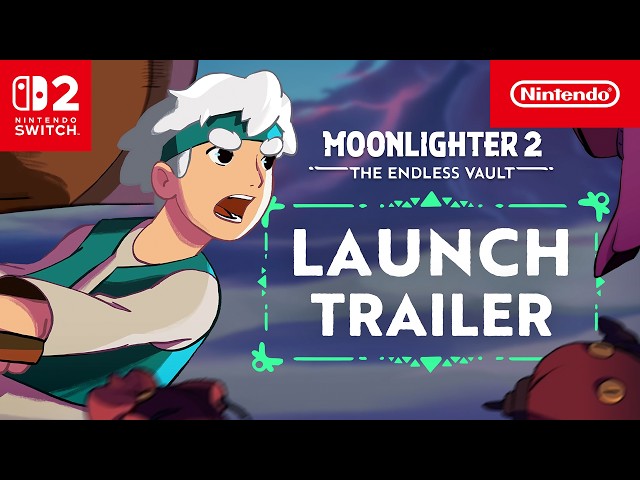
Lastly, are there any plans for DLC making its way into the sequel?
Right now, our focus is on making Moonlighter 2 the best it can be, with patches and improvements across all platforms. Once it's in a good place, we're of course open to expanding the world in new and exciting ways.
So, there you have it - the game will continue to grow and improve as time goes on. Whether you've played the first game or not, we recommend you download the demo on Switch and test out the roguelike game. You can also see our Moonlighter 2 review here for more of our opinions.